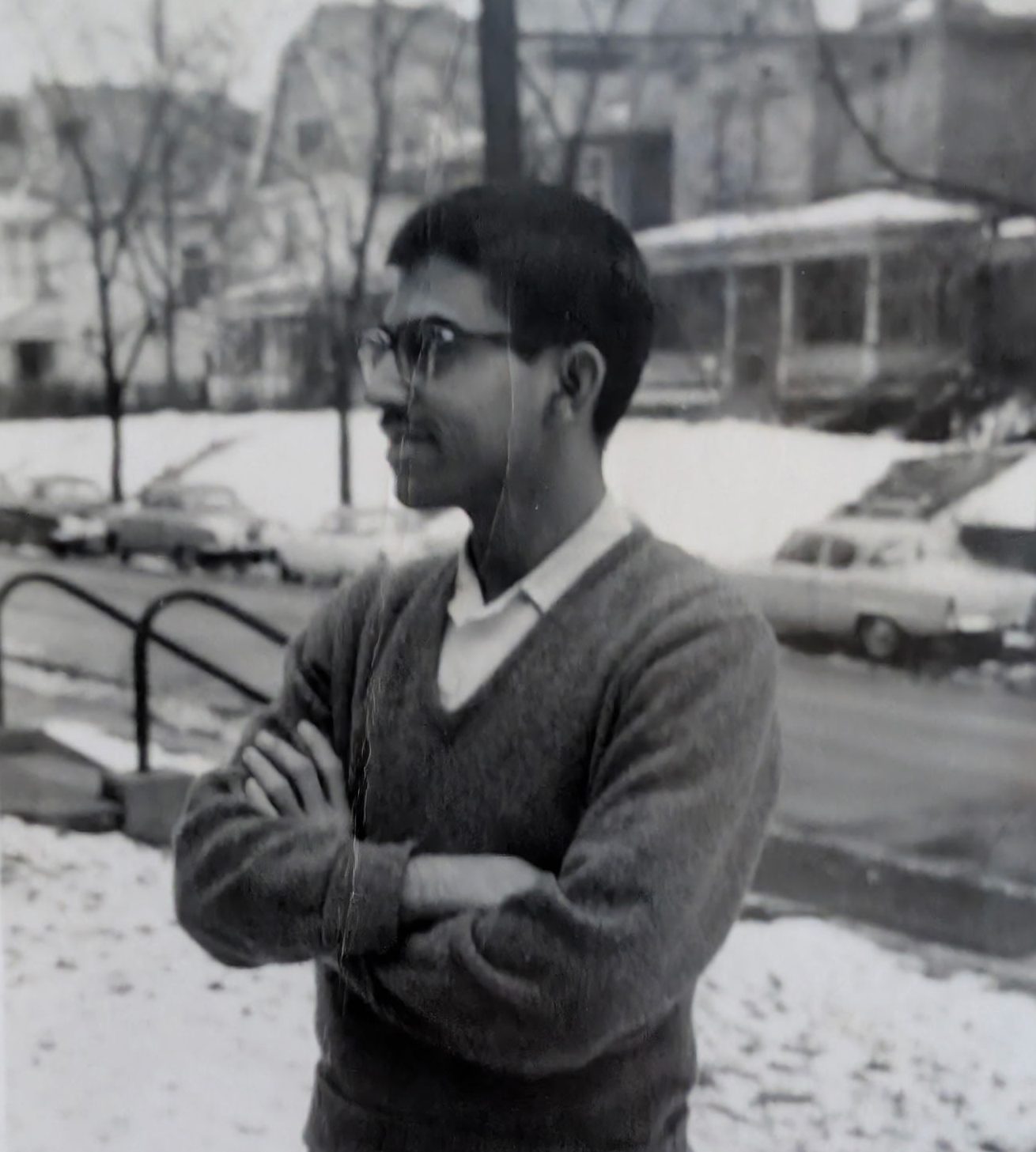
Reflections on the passing of Dr Riaz Haque, founder of CGAE, by Dr. Falguni Paul, co-director CGAE
In Memoriam: Dr. Riaz Ul Haque (1935–2026)
The Center for General and Applied Education stands as a living tribute to the life, vision, and enduring legacy of Dr. Riaz Ul Haque.
Dr. Haque was a microbiologist, educator, mentor, entrepreneur, and humanitarian whose life journey spanned continents, cultures, and generations. Born in Simla, India in 1935, he witnessed some of the most transformative events of the twentieth century. As a child, he experienced the upheaval of Partition and migrated with his family to the newly formed Pakistan. Those early experiences of displacement, resilience, and community would shape the values that guided his entire life.
Long before he became a scientist, Dr. Haque developed a deep commitment to public health and education. The loss of family members to preventable infectious diseases left a profound impression on him. He often reflected that ignorance, rather than fate, was responsible for many tragedies. This conviction inspired his lifelong belief that scientific knowledge should not remain confined to laboratories and universities but should be shared with ordinary people to improve lives.
Working his way through college, Dr. Haque became a skilled typist, administrator, and problem solver. His dedication and ability earned him positions of responsibility at a remarkably young age. Colleagues recognized not only his intelligence but also his integrity, leadership, and concern for the people around him.
In 1957, supported by the generosity of friends, mentors, and community members who believed in his potential, he embarked on a journey to the United States. Traveling by ship through Aden, the Suez Canal, Naples, and finally New York, he arrived with limited financial resources but limitless determination.
At The Ohio State University, Dr. Haque earned his Ph.D. in Microbiology in 1963. During his years as a student, he overcame significant financial challenges while pursuing rigorous scientific training. He often spoke with gratitude about the professors, staff members, and friends who helped him along the way. These experiences reinforced his belief that education flourishes through mentorship, kindness, and human connection.
Following his doctoral training, Dr. Haque joined the University of Illinois, where he distinguished himself as both a researcher and educator. He published pioneering scientific studies and became known for his ability to inspire students. Yet his greatest passion extended beyond academic achievement. He believed that science education should be accessible to everyone, regardless of background or circumstance.
This conviction led him to establish the International Foundation of Microbiology (IFOM), an educational initiative dedicated to bringing scientific learning to broader communities. Through IFOM and related educational programs, hundreds of students received training in microbiology, laboratory science, health education, and critical thinking. Many went on to successful careers in healthcare, industry, research, and education.
Those who knew Dr. Haque remember far more than his scientific accomplishments. They remember his generosity, curiosity, humility, and unwavering faith in the potential of others. He was a gifted storyteller who could move effortlessly between discussions of microbiology, history, literature, public health, philosophy, and everyday life. He believed that learning should never be limited to a single discipline and that education was ultimately about helping people become thoughtful, compassionate human beings.
His life demonstrated that scholarship and service are inseparable. Whether mentoring students, assisting colleagues, supporting community projects, or sharing knowledge with anyone willing to learn, Dr. Haque devoted himself to empowering others.
The Center for General and Applied Education continues this mission. Every course, workshop, educational initiative, and community project undertaken by the Center reflects the values he championed throughout his life: intellectual curiosity, scientific rigor, creativity, service, and respect for human dignity.
Dr. Haque’s story reminds us that education is not merely the transfer of information. It is the cultivation of possibility. His legacy lives on through the countless students, colleagues, family members, and communities whose lives he touched.
We honor his memory by continuing the work to which he dedicated his life: advancing knowledge, nurturing curiosity, and using education to build a better world.